

Understanding Corns on Feet: Causes, Treatments, and Prevention

Corns are a common foot ailment that can cause significant discomfort and pain. These thickened areas of skin form due to repeated pressure or friction, typically developing on the tops and sides of the toes or on the soles of the feet. If you've ever struggled with corns, you're not alone. In this blog, we'll dive into the causes of corns, how to differentiate them from calluses and warts, and the best treatment options available.
What is a Corn?
A corn is a small, concentrated area of hard skin that typically develops on the top or sides of the toes. These hard skin patches form due to constant pressure or friction, often caused by wearing tight or ill-fitting shoes. Corns are usually round or cone-shaped, with a hard, dense centre surrounded by inflamed skin. While they can form anywhere on your foot, they tend to be most painful when pressed.
Difference Between a Corn, Callus, and Wart
It's important to understand the differences between corns, calluses, and warts to ensure you're using the right treatment:
- Corns: Small, localised areas of thickened skin that usually develop on the tops or sides of your toes. They have a hard centre and are caused by pressure and friction.
- Calluses: Larger, less defined patches of thickened skin that usually form on the soles of the feet or the palms of the hands. Calluses are generally not painful and develop as a protective response to repeated friction or pressure.
- Warts: Caused by a viral infection (HPV), warts appear as rough, grainy textures and may have black dots on the surface. Unlike corns and calluses, warts are contagious and can spread to other areas of the body.
Do I Have a Corn or a Wart on My Foot?
Sometimes it’s difficult to tell whether you have a corn or a wart, but there are key differences that can help you distinguish between the two:
- Appearance: Corns are typically hard with a central core, while warts have a rough, grainy texture with black dots (blood vessels) on the surface.
- Location: Corns usually develop on the tops and sides of the toes, whereas warts can appear anywhere on the foot.
- Pain: Corns tend to be painful when pressed, while warts may only hurt when squeezed from the sides.
- Cause: Corns are caused by pressure and friction, while warts are caused by a viral infection.
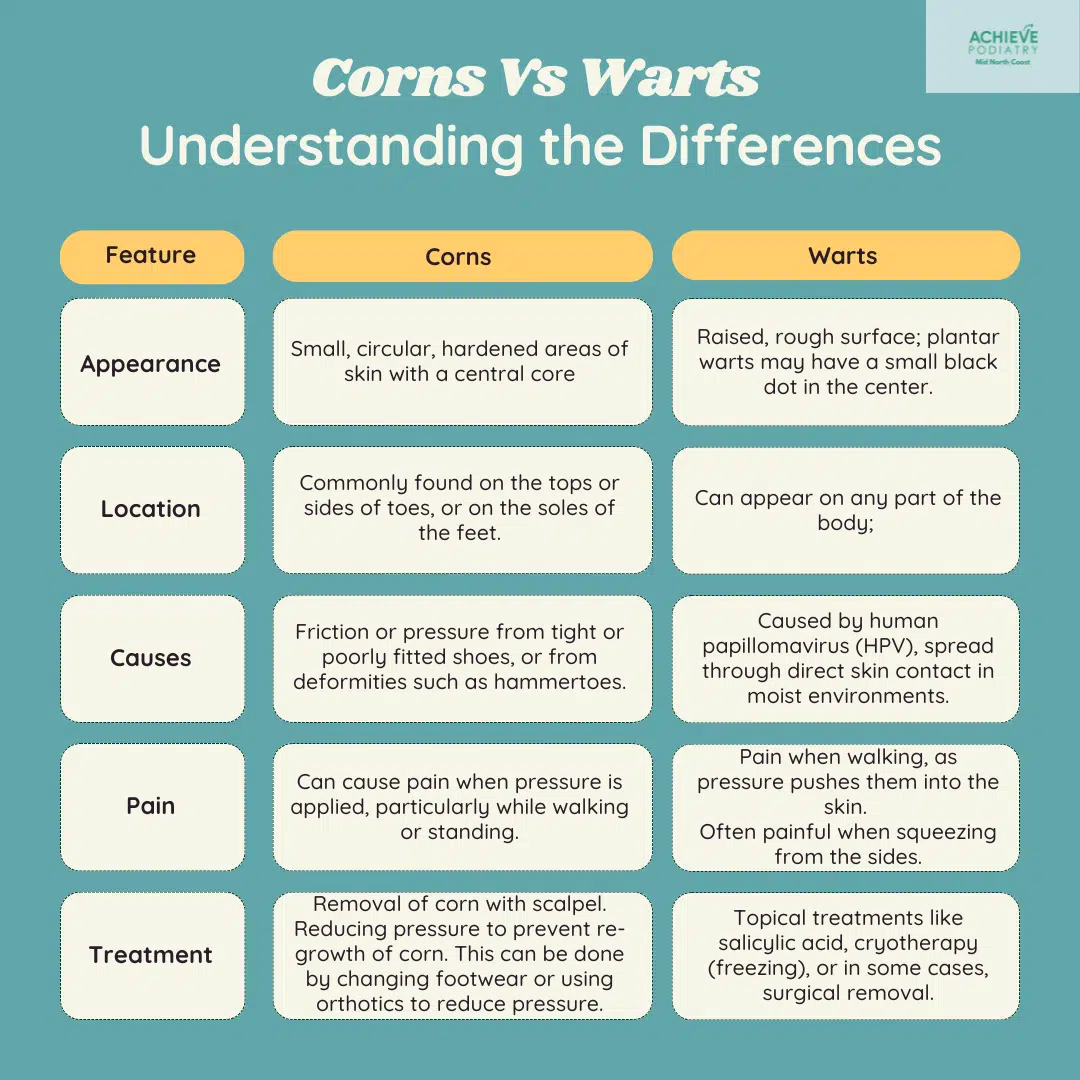
If you're uncertain whether you have a corn or a wart, it’s best to consult a healthcare professional for an accurate diagnosis and appropriate treatment.
Podiatrists and Corns
Podiatrists, like Cameron Liles from Achieve Podiatry, specialise in diagnosing and treating foot and ankle conditions, including corns. If you have persistent or painful corns, a podiatrist can provide several effective treatments, including:
- Trimming: Carefully trimming the thickened skin using a scalpel.
- Padding: Providing padding to reduce pressure on the affected area.
- Orthotics: Recommending custom-made shoe inserts to correct any underlying foot structure or gait issues.
- Advice: Offering guidance on proper footwear and foot care to prevent recurrence.
How Do I Get Rid of a Corn on My Foot?
There are several ways to treat and remove corns at home:
- Soaking and Exfoliating: Soak your feet in warm, soapy water for 10-15 minutes to soften the skin. After soaking, gently rub the corn with a pumice stone or foot file to remove dead skin. Be careful not to overdo it, as this can lead to bleeding and infection.
- Moisturising: Keeping your feet moisturised helps to soften the corn and reduce discomfort. Apply a thick, emollient-rich cream daily to keep the skin smooth.
- Footwear: Wear well-fitting shoes with ample toe room and cushioning to reduce pressure. Avoid high heels or tight shoes that exacerbate the problem.
- Padding: Use non-medicated corn pads to cushion the affected area and reduce pressure.
If these home remedies aren’t working, or if you have conditions like diabetes that affect circulation, it’s important to seek professional medical advice.
Benefits of Orthotics to Treat Corns
Orthotics custom-made shoe inserts that can provide significant relief and help prevent corns. Here’s how orthotics can benefit you:
- Pressure Redistribution: Orthotics help distribute pressure evenly across your foot, reducing localised pressure points that can lead to corns.
- Improved Foot Function: By correcting biomechanical issues such as overpronation or flat feet, orthotics can improve foot function and reduce the likelihood of developing corns.
- Enhanced Comfort: Custom orthotics provide additional cushioning and support, making walking and running more comfortable.
- Prevention: Orthotics can prevent the recurrence of corns by addressing the root causes of pressure and friction.
Conclusion
Corns on the feet can be a painful and persistent issue, but with the right care and treatment, they can be effectively managed. Understanding the differences between corns, calluses, and warts is essential to choosing the right approach to treatment. If you're dealing with persistent or painful corns, consulting a podiatrist like Cameron Liles from Achieve Podiatry can help you get the right diagnosis and treatment. Additionally, using orthotics can address underlying foot problems and prevent corns from returning. By prioritising proper footwear and foot care, you can keep your feet healthy and free from corns.